
When dinner rush hits and a pan handle snaps, you don’t have time to panic. You want to know how to fix broken restaurant cookware fast so you keep tickets moving, protect your equipment budget, and avoid sending cooks scrambling for backup gear. A simple plan for common damage types keeps you calm while everyone else watches the printer spit tickets.
Bent or Warped Pan Bottoms
Warped pans don’t sit flat and create hot spots that burn food. Light warping often responds to gentle taps: set the pan upside down on a towel, rest a flat block on the base, and tap with a rubber mallet.
When the bottom shows deep dents, heavy warping, or cracks, that pan belongs in the scrap pile, since it won’t heat evenly again.
Loose or Broken Handles
Loose or broken handles turn a good pan into a burn hazard. Bolted handles just need new hardware with high temperature thread locker. You can often fix welded steel or aluminum handles by re-welding the joint. Welding sounds complicated at first, but you’ll pick up the basics fast if you follow a clear guide, use basic safety gear, and practice a few beads on scrap metal.
But if you need to weld cast iron, which is a common material for many skillets, griddles, and dutch ovens, things get a bit trickier. This material is brittle and needs a slow, controlled approach if you want to fix it without new cracks forming.
Chipped Enamel or Nonstick Coating
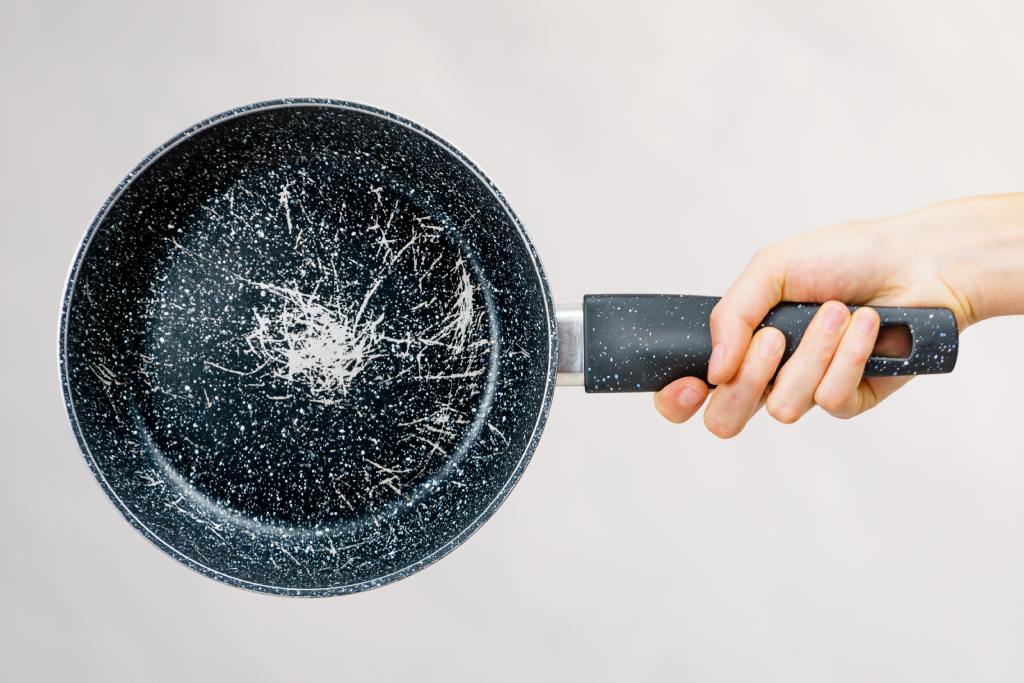
Once enamel or nonstick starts chipping, you face a safety and quality issue. Small cosmetic chips on the outside of a pot usually don’t affect performance, but interior chips, flakes, or peeling coating expose the base metal and can end up in food.
That cookware belongs in the discard pile, because replacement protects guests, staff, and reputation better than any repair attempt.
Burnt-On Carbon Build-Up
Burnt-on carbon on the base or sides kills heat transfer and causes sticking. A long soak in hot water with a strong degreasing detergent loosens most buildup. You can scrub the rest off with a chainmail scrubber or plastic-safe scraper. Extreme buildup sometimes needs an overnight baking soda paste or commercial soak, followed by a full re-seasoning for carbon steel or cast iron pieces.
Reliable Cookware Keeps Service Moving
A kitchen that stays on top of repairs wastes less money and deals with fewer surprises during peak hours. When you understand how to fix broken restaurant cookware fast, you stretch the life of good pieces, retire unsafe ones, and keep cooks focused on food instead of broken gear. A small repair kit and standards for what gets tossed keep service running smoothly.