
For a machine so integral to farm life, the hay baler carries more cultural and business impact than many people realize. In a state like North Carolina, where agriculture still shapes local economies, restaurants, and rural communities, hay balers support more than fields. They help move feed through supply chains that touch food production, livestock care, and small business operations. Keep reading to learn some things you didn’t know about hay balers.
Hay Balers Help Support the Food Scene
Hay balers do not make food directly, but they play an important role in the systems behind it. Livestock need stored feed, and baled hay helps farmers keep animals fed through changing seasons. That matters to dairy producers, cattle operations, and other agricultural businesses that connect to the food world.
When people think about farm-to-table culture, they may picture produce, meats, or markets, but the equipment behind feed production matters too. In that sense, hay balers support part of the chain that keeps food businesses moving.
The Machine Changed Farming Speed in a Big Way
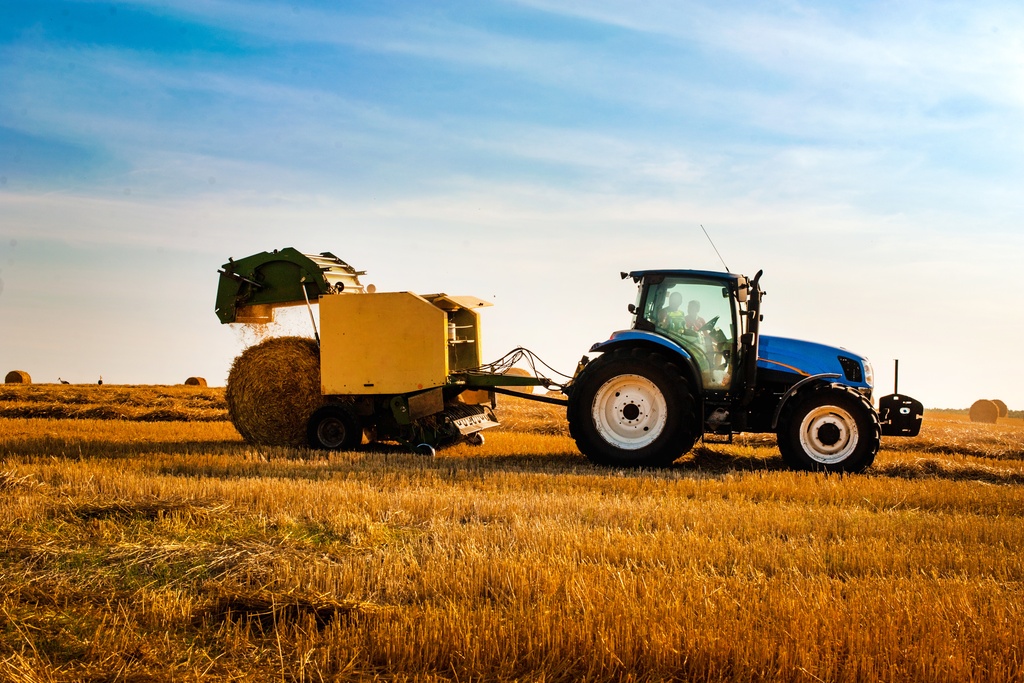
Before balers became standard, farmers had to gather, stack, and store loose hay by hand. That process took time, labor, and serious physical effort. The baler transformed that routine by compressing hay into manageable shapes that workers could move, stack, transport, and store with much greater ease.
The hay baler has a fascinating history and evolution from its primitive original designs to the modern marvels of today. Early models were simple compared with modern systems, and inventors kept refining them as farms demanded greater speed and consistency.
Bale Shape Affects Storage and Transportation
Another thing you probably didn’t know about hay balers is that not all bales are the same. Small square bales, large square bales, and round bales each serve different needs. Some farms want easier manual handling. Others need faster mechanical loading or better outdoor storage.
Bale shape affects how much hay a farmer can move in one trip, how the hay stacks in a barn, and how well it holds up in storage. That practical design choice turns hay balers into a tool with a real business strategy behind it.
Modern Balers Pack in More Technology Than People Expect
Today’s balers do far more than compress cut hay. Many models include advanced monitoring systems that help operators track bale density, moisture conditions, and machine performance. These features can improve consistency and reduce losses during harvest. For business-minded readers, that means the machine is not just a field tool. It is also a productivity tool that supports planning, labor management, and long-term equipment value.
Hay Balers Reflect More Than Farm Machinery
Hay balers tell a story about invention, labor, and rural business growth. They connect engineering with agriculture in a way that still matters across North Carolina and beyond. What looks like a simple machine from the roadside actually reveals a lot about how communities feed animals, sustain farms, and build stronger local economies.