

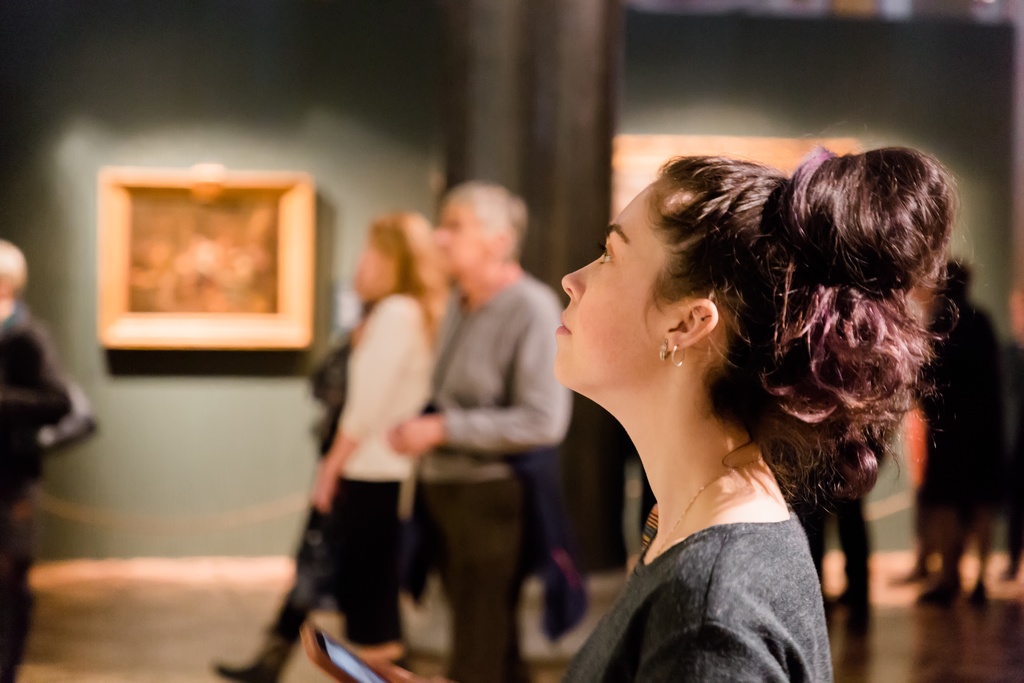
An informed art gallery visit starts before the first artwork comes into view. Visiting an art gallery with a clear sense of what to notice can turn a casual stop into a more rewarding experience.
Most galleries communicate a point of view through selection, placement, and pacing. The strongest shows present a clear curatorial direction instead of a random group of works that happen to share a room.
Start With the Curatorial Theme
The wall text near the entrance often sets the tone for the entire show. It usually explains the exhibition theme, the time period, the medium, or the questions the work aims to raise.
That context helps readers judge whether each piece supports the larger idea. The most effective gallery visit should leave you with a coherent thread as you explore each room or section.
Study Labels Without Letting Them Lead
Labels offer useful facts such as title, date, medium, and dimensions. They can also point to recurring materials, shifts in style, or major moments in an artist’s career.
Still, the work should come first. Looking closely before reading the label often helps you form a more honest response and makes later context more useful.
Watch How the Space Shapes the Work
Layout matters as much as the art itself. Lighting, spacing, sightlines, and wall color can sharpen the impact of a work or flatten it.
Strong galleries leave enough room for each piece to hold attention without visual crowding. Visiting an art gallery becomes more productive when the space allows viewers to compare works without distraction.
Notice Quality, Not Just Style
A striking style can attract quick attention, but quality usually shows up in execution, consistency, and intent. Surface detail, material handling, and composition often reveal more than novelty alone.
This matters even more in contemporary exhibitions, where bold ideas can overshadow discipline. Visitors who want to look for emerging contemporary art should pay attention to whether the work shows control as well as originality.
Check for Artist Context and Progression
A gallery often provides clues about where an artist stands in a broader career path. Solo exhibitions, past venues, awards, and publication history can signal how the work fits into a larger professional context.
Progression also matters within the room. When several works show a clear development of subject, material, or concept, the exhibition usually carries more depth than a display built around one repeated idea.
Leave Room for a Second Look
First impressions count, but they rarely tell the full story. Some works gain strength after a second pass, especially after the broader exhibition theme becomes clearer.
That second look often separates memorable shows from forgettable ones. A thoughtful gallery visit depends less on speed and more on attention, context, and the willingness to slow down. As you visit your nextart gallery, remember these tips for what to look for and know going into it for the best experience.