

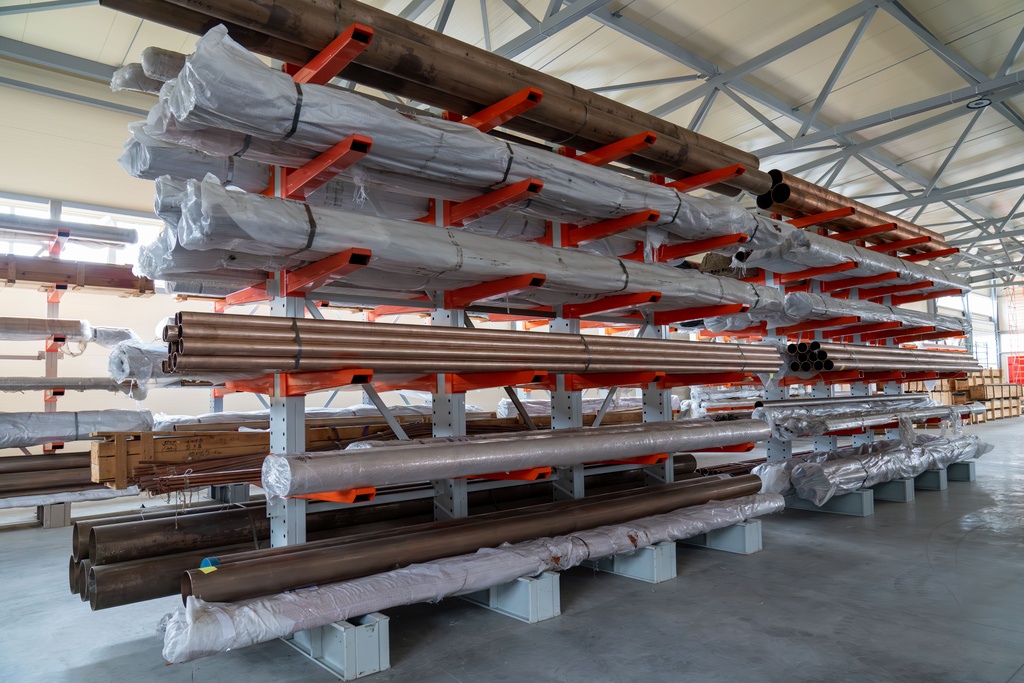
Long and bulky materials demand thoughtful planning before you place the first rack or pallet. Items like lumber, piping, and metal beams take up more horizontal space and often require specialized storage solutions.
Business owners must evaluate inventory dimensions, handling equipment, and workflow patterns before finalizing a layout. Designing a warehouse layout for long and bulky materials requires clear planning to prevent congestion and protect both workers and valuable inventory.
Choose the Right Storage Systems
Selecting the correct storage system is critical for handling long materials efficiently. Many warehouses rely on cantilever racking because it supports long items without vertical obstructions. This design allows workers to store and retrieve materials quickly without damaging products. Business owners who invest in specialized storage reduce clutter and maximize available space.
You should also organize the racks by inventory categories and usage frequency. High-demand items should sit closer to packing and shipping zones. Lower-turnover materials can remain in secondary storage areas farther from main pathways. Strategic placement reduces travel time and streamlines daily operations.
Plan Wide, Efficient Aisles
Aisle width becomes critical when warehouses store bulky materials. Forklifts and specialized equipment require additional clearance when transporting long items across the floor. Narrow aisles may appear space-efficient, but they create traffic bottlenecks and increase the chance of collisions.
Warehouse planners should also consider the turning radius for forklifts carrying long loads. Materials that extend beyond forks require extra space during movement and rotation. Smooth traffic flow keeps operations running efficiently throughout the day. Clear pathways also help supervisors maintain better visibility across the warehouse floor.
Prioritize Safety in Storage Design
Safety should guide every decision in a warehouse layout. Long and heavy materials can shift or fall when improperly stored by workers. Teams must follow important safety practices for cantilever racking to prevent structural strain and uneven weight distribution. Proper loading techniques and weight limits protect both workers and equipment.
Managers should also train employees to handle oversized materials with consistent procedures. Clear signage, rack labels, and designated storage zones help prevent mistakes. A well-organized warehouse reduces confusion during busy shifts. Strong safety habits create a more reliable operation overall.
Create Zones That Support Workflow
Successful warehouse layouts rely on clearly defined zones. Receiving, storage, picking, and shipping areas should connect logically to minimize unnecessary movement. Long materials often require separate zones to prevent interference with smaller inventory. Organized zones also make it easier for employees to locate items quickly.
Seasonal demand or product expansions may require different storage configurations. Flexible layouts allow companies to adapt without major disruptions. Continuous improvement helps warehouses stay efficient as operations grow.
Review and Optimize the Layout Regularly
When you plan a warehouse layout for long and bulky materials, you need to evolve with your business needs. Inventory changes, new equipment, and higher order volumes can affect how materials move through the facility.
Regular reviews help managers identify congestion points or underused areas. Small layout adjustments often lead to major productivity gains. Establishing a strong foundation for your warehouse helps scale successfully as demand increases.