

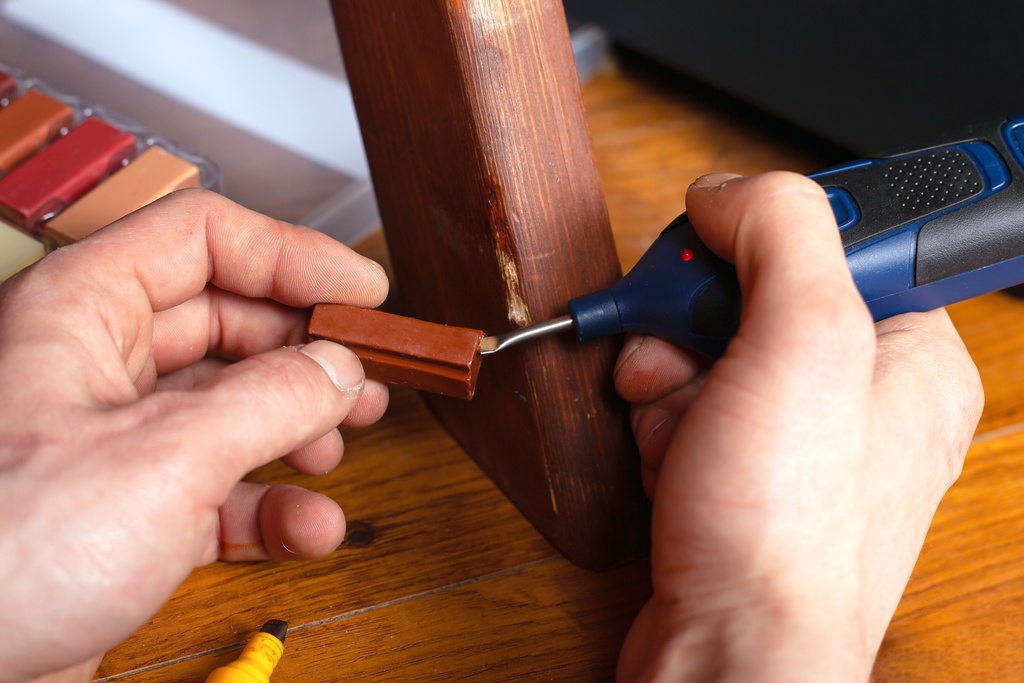
Wooden furniture takes a beating over time. Scratches, loose joints, dents, and water rings show up fast, especially on pieces you use every day. You don’t need professional tools or years of experience to fix most of these problems. With the right approach and a little patience, you can bring tired furniture back to life and save money in the process.
Start with a Thorough Inspection
Before you grab any tools, look over the entire piece. Check for loose joints, cracked panels, missing screws, and surface damage. Wiggle the legs and arms to find movement. Press gently on panels to spot hidden weakness.
Ask yourself a few key questions:
- Does the piece wobble?
- Do you see cracks along joints?
- Has veneer started to peel?
- Do drawers stick or sag?
When you understand the full scope of the damage, you avoid patching one issue while ignoring another. A careful inspection helps you plan your repair and gather the right supplies.
Tighten and Reinforce Loose Joints
Loose joints create most stability problems in wooden chairs and tables. Tighten screws first. If screws spin without gripping, remove them and fill the hole with wood glue and toothpicks. Let the glue dry, then drive the screw back in for a snug fit.
For more serious separation, pull the joint apart gently. Scrape off old glue, apply fresh wood glue, and clamp the joint firmly. Keep steady pressure on the area for several hours.
If you deal with a cracked joint or broken section, use fast-set epoxy glue to create a strong bond. Apply it carefully, press the pieces together, and clamp them until the adhesive hardens. Epoxy works especially well on load-bearing areas.
Fix Scratches and Surface Damage
Minor scratches often disappear with simple solutions. Rub a matching wood stain marker over light scratches. Blend the color with a soft cloth. For deeper scratches, fill the groove with wood filler that matches the finish. Sand the area lightly after it dries, then apply stain and a protective topcoat.
Water rings respond well to gentle sanding. Use fine-grit sandpaper and work in the direction of the grain. Wipe away dust and reapply finish to restore the shine.
When you repair veneer, lift the loose section carefully. Spread wood glue underneath, press it flat, and clamp it between two pieces of wax paper and scrap wood. This method prevents glue from sticking to your clamps.
Repair Dents and Gouges
Steam removes many shallow dents. Place a damp cloth over the dent and press a hot iron on top for a few seconds. The heat causes the wood fibers to expand and rise. Repeat the process until the surface levels out.
For deeper gouges, fill the damaged area with wood filler. Shape it with a putty knife and let it dry completely. Sand the patch smooth and match the surrounding stain as closely as possible.
Sand and Refinish with Care
Good sanding makes or breaks your project. Always sand in the direction of the grain. Start with medium grit and move to fine grit for a smooth surface. Wipe away dust before applying stain or sealant.
Apply thin coats of stain and finish. Allow each coat to dry fully before adding another layer. Lightly sand between coats to improve adhesion and smoothness.
With steady effort and attention to detail, you can handle most wooden furniture repairs yourself and keep your favorite pieces looking solid for years.